Daily Meal Awareness
Developing awareness of eating patterns and food choices throughout the day
February 2026
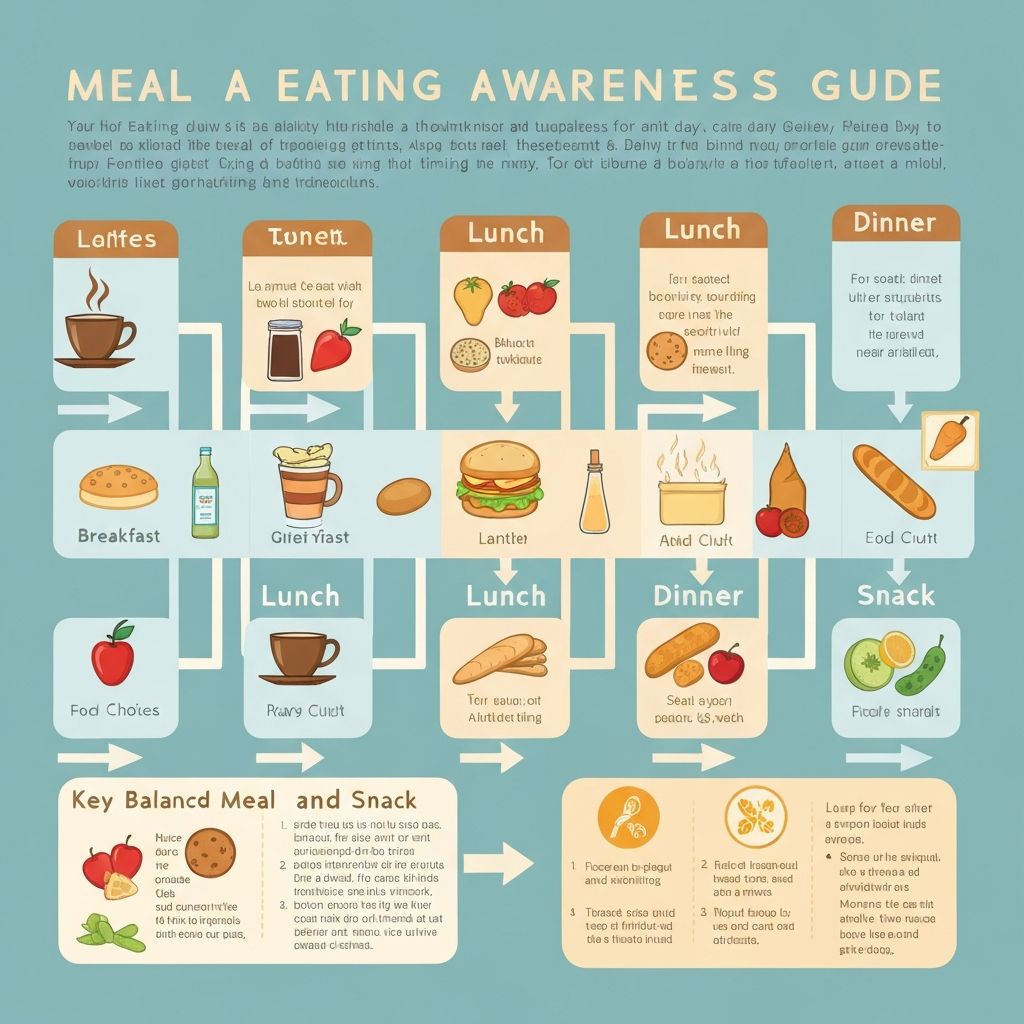
Understanding Daily Eating Patterns
Daily eating patterns describe the distribution and timing of food consumption throughout the day. These patterns vary significantly across individuals based on lifestyle, work schedules, cultural practices, family routines, and personal preferences. Understanding one's own eating patterns can support awareness of food choices and consumption habits.
Meal Timing and Frequency
Different approaches to meal timing and frequency exist across populations. Some people follow three structured meals daily, while others practice different patterns such as frequent small meals, intermittent approaches, or other arrangements. These variations reflect diverse cultural practices and individual lifestyles rather than representing a universal standard.
Food Choices Across the Day
Food choices throughout the day are influenced by multiple factors including availability, cultural traditions, work or daily schedules, social interactions, emotional states, and personal preferences. Awareness of how these factors influence choices can support informed understanding of eating habits without prescribing specific choices.
Energy Distribution Throughout Day
Energy intake varies across the day depending on meal distribution. Some individuals consume more energy in morning meals, while others distribute intake more evenly or consume more during evening hours. Different distributions reflect diverse approaches rather than representing one correct pattern.
Mindful Observation of Patterns
Observing one's own eating patterns without judgment can support awareness. This might include noticing typical meal times, common food choices, portion sizes, eating speed, environmental factors, and emotional associations with eating. Such observation supports informed understanding of personal habits.
Adaptation to Life Circumstances
Daily meal patterns adapt to changing life circumstances including work schedules, family situations, seasons, and other factors. Flexibility and adaptation in eating patterns reflect the reality of daily life. What works for one person or during one period may differ during other circumstances.
Important Context
Educational content only. No medical services. No promises of outcomes. This information is presented for educational purposes and should not be considered medical advice or a substitute for professional consultation.